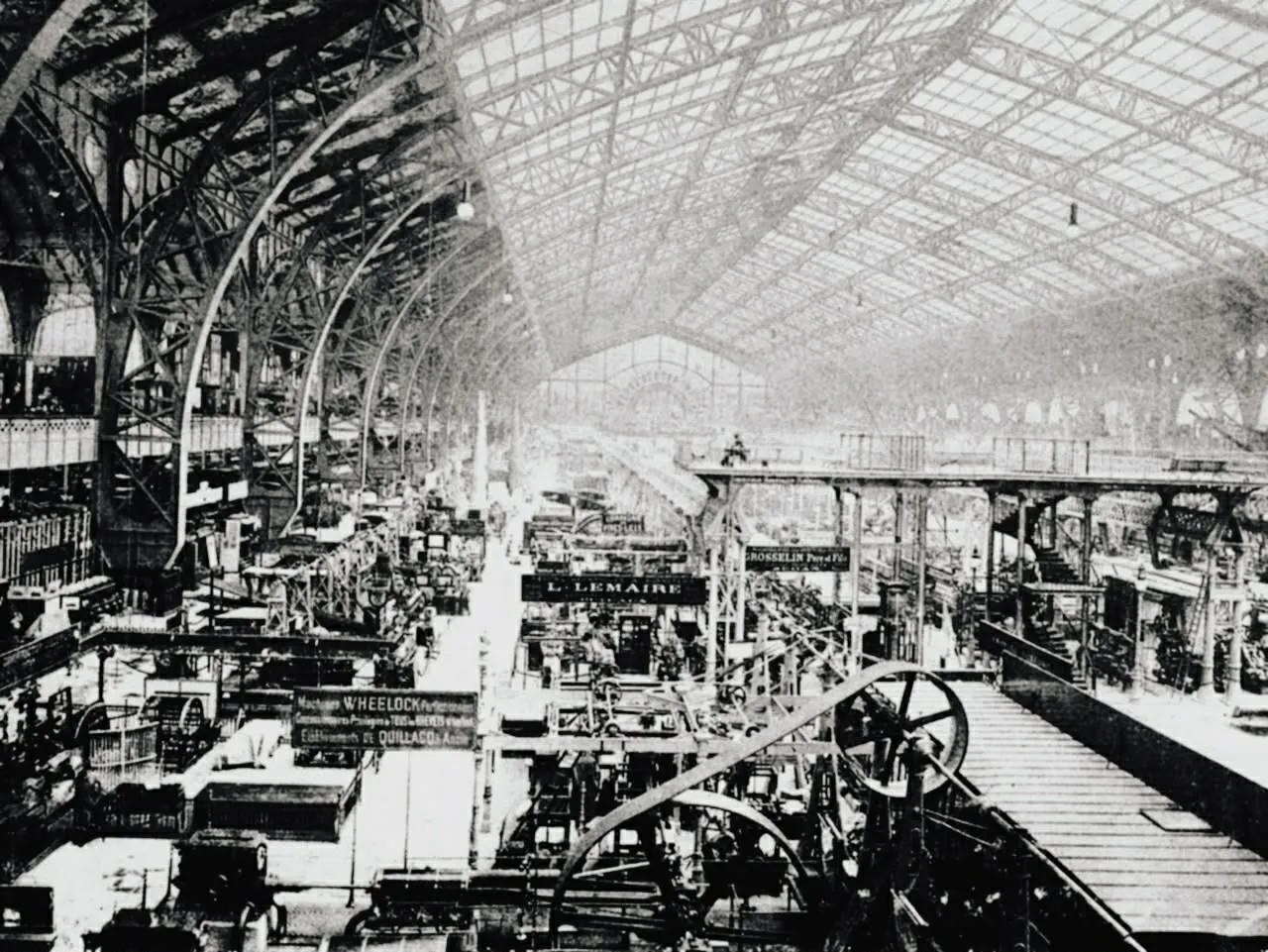
Interior view of the Gallery of Machines at the Paris Exposition (1899)
I. Panimula
Ang kapitalismo ay kapitalismo; hindi ito nagbabago; maiba man ang porma o anyo, ito’y kapitalismo pa rin. Ito’y parang kanser na kayang kumalat o kopyahin ang kaniyang sarili. Hindi ito maaamo, parang singsing lang ni Sauron. Ang pagpreserba nito kahit ito ay kontrolado ng sosyalistang estado ay isang reaksyunaryong gawain, dahil sa huli, ang sosyalistang estado ay mabubulok.
Ang paglaban sa kapitalismo gamit ang mga konsepto nito ay parang pag-apula ng apoy gamit ang apoy. Ang mga pundamental na lohika ng Kapital ay di magbabago hanggang sa ito ay tuluyang malupig. Ganoon din sa imperyalismo; tuluyan mo lamang matatalo ang imperyalista kung ganap mong mabubuwag ang kapital.
Hindi rin basta-basta mabubuwag ang kapital sa pamamagitan ng pagsupil sa mga taong nagsisilbing “ulo” nito. Walang kwenta ang pagpuksa sa kanila sapagkat ang kapital ay isang malaking “dead labor” (patay na lakas-paggawa). Ang ugali nito ay parang isang awtomatikong diktador na nagdidikta kung paano dapat gumagana ang buong lipunan. Ang pagpatay sa indibidwal na “ulo” ng kapitalismo ay parang pagpatay rin sa isang Ringwraith; ang singsing ay makakahanap lamang muli ng daliring pagsusuotan nito. Sa madaling salita, babalik-balik ang kapitalismo.
II. Mga Nag-aastang Sosyalistang Estado
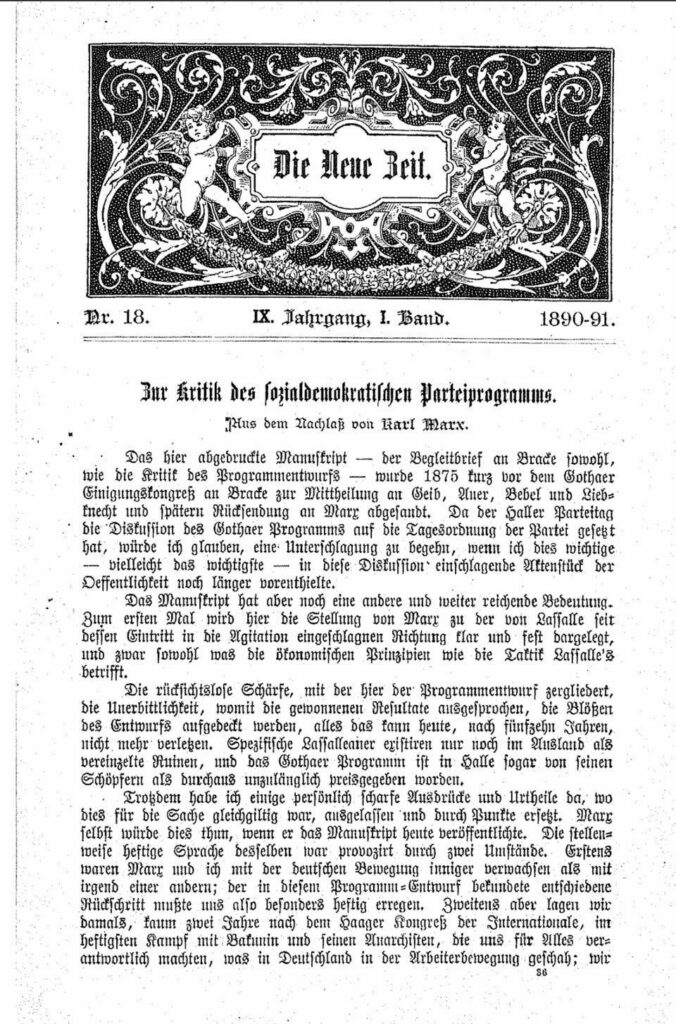
The first page of Gothakritik appeared in Die Neue Zeit (1891)
Sosyalista nga ba ang isang estado kung pinagpreserba nito ang mga konsepto ng kapital? O mga bansang umaastang sosyalista sa pangalan? Konsultahin natin si Marx sa Gothakritik:
“That, in fact, by the word “state” is meant the government machine, or the state insofar as it forms a special organism separated from society through division of labor, is shown by the words “the German Workers’ party demands as the economic basis of the state: a single progressive income tax”, etc. Taxes are the economic basis of the government machinery and of nothing else. In the state of the future, existing in Switzerland, this demand has been pretty well fulfilled. Income tax presupposes various sources of income of the various social classes, and hence capitalist society” – Karl Marx, Critique of the Gotha Programme.
Kinukutya ni Marx ang ideyang ang estado ay isang “sosyalista” ngunit ang ekonomiyang makina nito ay nanatili pa ring kapitalista. Pero alam naman ni Marx na hindi basta-bastang mabubuwag ang konsepto ng Kapital, ayon nga sa kanya muli:
“What we have to deal with here is a communist society, not as it has developed on its own foundations, but, on the contrary, just as it emerges from capitalist society; which is thus in every respect, economically, morally, and intellectually, still stamped with the birthmarks of the old society from whose womb it emerges.” – Karl Marx, Critique of the Gotha Programme.
Upang pasimplehin ang kaniyang sinabi, ang “sosyalismo” ay hindi isang “tabula rasa”. Nakatali pa rin ito sa mga istruktural at pisikal na konsepto ng kapital. Kaya, ang minumungkahi ni Marx sa “lower phase” (mababang yugto) ay isang pakikibaka upang tuluyang maalis ang mga “birthmarks” (mga bakas) ng Kapital.
III. Ang mga Sungay ng Kapital
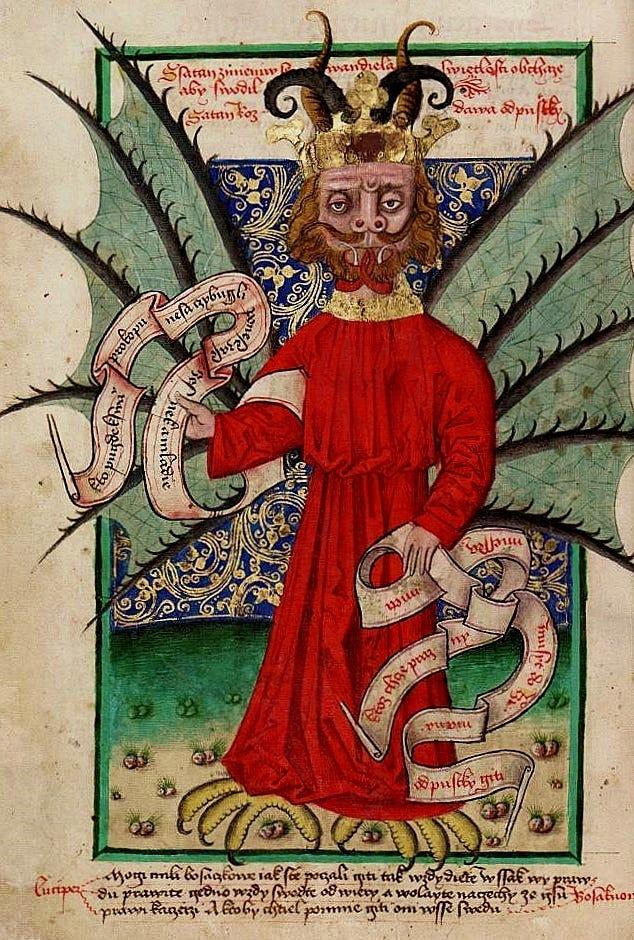
The devil is selling indulgences. Illustration from Jena Codex (1490-1510 CE)
“Capital must be seized by the horns.” – Amadeo Bordiga, Doctrine of the Body Possessed by the Devil.
Ang tanging makakabuwag lamang sa kapital ay ang pagputol sa mga sungay nito, hindi sa mga indibidwal na ulo nito. Ano nga ba ang mga sungay na ito? Batay sa aking pagkakaintindi sa teksto ni Bordiga sa Doctrine of the Body Possessed by the Devil at sa mga konsepto ni Marx sa Das Kapital Vol. 1, narito ang mga pangunahing sungay ng Kapital:
Ang “Law of Value” (Batas ng Halaga). Ito ay isang internal na mekanismo na nagdidikta sa halaga ng isang produkto batay sa kabuuang “labor time” (oras ng paggawa) na kinakailangan upang malikha ito. Ang batas na ito ay nagsisilbing sungay dahil awtomatiko nitong kinokontrol ang lipunan sa mga paraang naturalisado. Pinupuwersa nito ang mga negosyo, kahit ang mga nasa ilalim ng isang sosyalistang estado, na magpaligsahan, magtipid sa produksyon, at mang-abuso ng lakas-paggawa upang manatili o mabuhay sa merkado.
Hangga’t may “Law of Value,” hindi makokontrol ng estado ang ekonomiya; ang ekonomiya ang kumokontrol sa estado. Sa ganitong lohika, ang sosyalistang estado ay tiyak na mabubulok at magbabalik lamang sa kapitalistang anyo na nais nitong buwagin.
Ang “Commodity Production” (Produksyong Pangkalakal). Ito ang sistema kung saan ang mga bagay ay nililikha upang ibenta sa merkado (Exchange-Value) sa halip na direktang gamitin (Use-Value).
Nagsisilbi itong sungay dahil hangga’t ang mga produkto ay may presyo at ang paggawa ay binabayaran ng sahod, ang lipunan ay nananatiling nakahawla sa palitan. Kahit kontrolado ng estado ang mga kumpanya o negosyo, kung ang layunin pa rin ay kumita at makipagpaligsahan sa merkado, ang lohika ng kapitalismo ang mangingibabaw. Sa madaling salita, ang produksyong pangkalakal ang kadenang nagpapanatili sa “sapi” ng kapital sa katawan ng lipunan; hindi mapapalaya ng estado ang mga manggagawa kung ang ginagawa lamang nito ay pamahalaan ang pagbebenta ng kanilang lakas-paggawa.
Maaaring marami pa akong hindi nabanggit na sungay, pero isa ang mga ito sa pinakamatulis at siyang namamayagpag sa kabuuan ng Kapital; sila ang nagsisilbing buhay na makina na nagpapatuloy sa siklo ng pagsasamantala kahit pa pinalitan na ang mukha ng mga naghaharing uri.
IV. Tuluyang puksain ang sungay ng demonyo (Ang Sungay ng Kapital)
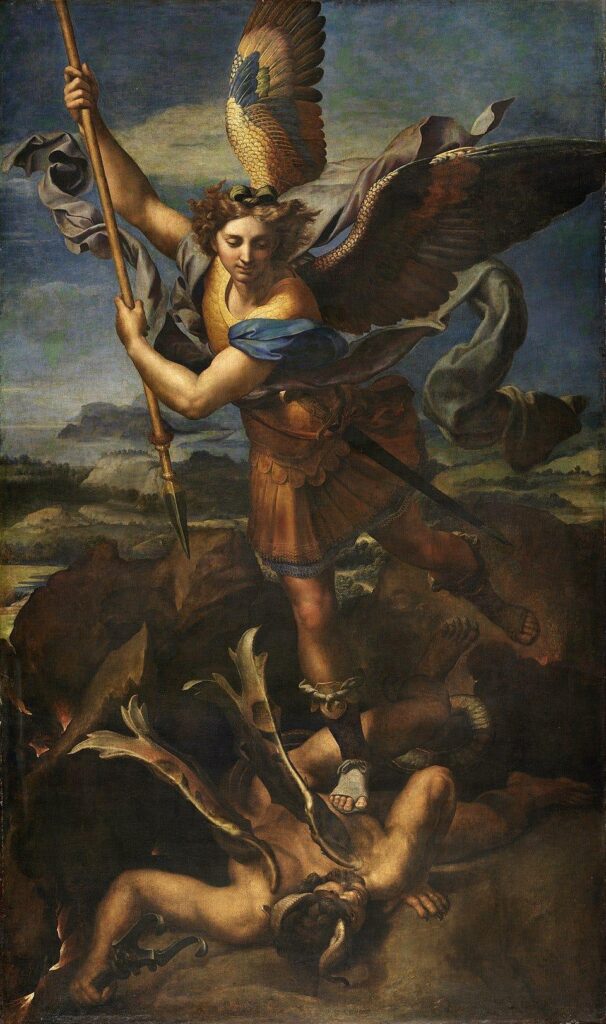
Raphael’s Saint Michael Vanquishing Satan (1518)
Batid na natin ang kanser na ugali ng kapital. Alam natin kung paano nito pinabubulok ang mga sosyalistang estado (maging ang mga huwad na nagbibihis-sosyalista lamang), kung paano pinagagalaw ng mga sungay nito ang makinarya ng pagsasamantala, at kung paano nito muling nililikha ang sarili: putulin mo man ang mga ulo nito, parang hydra na tutubo at tutubo pa rin ito.
Upang tuluyang mapuksa ang demonyo ayon kay Marx (Klasikal na Marxistang posisyon), kailangan ang paggamit ng Dictatorship of the Proletariat upang tuluyang mabuwag ang “Capitalist Class Relations,” “Wage-labor,” “Commodity,” “Law of Value,” “Division of Labor,” “State”, “Classes” at iba pa. Sa madaling salita, ito ay ang pagputol mismo sa mga ugat ng Kapital; ang pagputol sa mga ugat o sungay nito ang magpapatigil sa muling paglikha nito sa kaniyang sarili.
V. Pangwakas
Alam na natin ang posisyon ng klasikal na Marxista kung paano bubuwagin ang Kapital. Hindi ko na rin uulitin ang mga puntong sinabi ko sa mga nakaraang talata ng tekstong ito. Kung kaya’t ito ay tatapusin ko sa isang serye ng mga katanungan.
“Invariant” o di nagbabago ang Marxismo katulad ng sinabi nina Bordiga, at rebisyunismo o oportunismo ba ang pagdagdag sa mga doktrina nito? O nasyonalisasyon muna ba ng isang bansa bago ito maging ganap na sosyalista katulad ng mga iminungkahi nina Mao at Stalin? Paano matatalo ng internasyonalismo ang modernong mukha ng imperyalismo? Kailangan ba talagang makipag-class collaborate ng mga pesante at proletaryado sa nasyonal na burgesya? Kailangan ba na ang posisyon lagi ng Marxista ay ang “revolutionary defeatism” ni Lenin, o dapat bang unahin muna ang anti-imperial struggle na hindi ito isinasailalim (subordinated) sa class struggle? O tama ang mga Anarkista na napalitan lamang ng burukrasya ang Dictatorship of the Proletariat? Ano nga ba ang dapat nating gawin?
Tuluyan lamang masisira ang Kapitalismo kapag pinutol mo ang mga sungay ng Kapital. Kung kaya’t magandang analohiya rito ang “One Ring” sa Lord of the Rings. Tuluyan lang masisira ang singsing kung ibabato mo ito sa Mount Doom. Gagayahin mo ba si Isildur na sinarili ang singsing o si Frodo na itinapon ito sa bulkan?
Mga Sanggunian:
Bordiga, A. (1951). Doctrine of the body possessed by the devil.
Bordiga, A. (1952). The historical “invariance” of Marxism.
Marx, K. (1867). Capital: A critique of political economy: Vol 1.
Marx, K. (1875). Critique of the Gotha programme.
Tolkien, J.R.R (1954). The lord of the rings.