

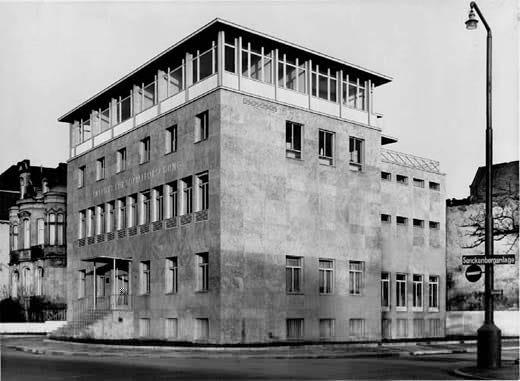
Institut für Sozialforschung. (1951).
While skimming Alfred Schmidt’s History and Structure, I began reassessing certain revisionist tendencies associated with Althusser’s Structural Marxism. The framework is interesting, yet if social reality is reduced to structure and ideology, how does class struggle materialize? Without praxis, the material basis of transformation becomes unclear.
In the 1960s-70s, Louis Althusser introduced the concept of Structural Marxism, a form of Marxism that seeks to be anti-humanist. He outright rejects the idea that a human essence, human nature, or autonomous subjects fundamentally drive history. Marxism, he argued, should be treated as a science of structures rather than a philosophy of human subjects.
To Alfred Schmidt, this scientific position façades something else entirely. Structural Marxism, by dissolving human agency into impersonal structures, ultimately reproduces the very ideological abstractions it claims to overcome.
Schmidt argues that Althusser often presents structuralist concepts, such as overdetermination or the primacy of the economic, as if they were Marx’s own, without carefully connecting them to the text. Although Althusser rejects the label of structuralism, this can overstate the originality of his interpretation. Marx’s work unfolds gradually, as seen in his discussion of commodity fetishism in Capital Vol. 1 or historical materialism in the Preface. By moving too quickly and imposing his framework, Althusser risks reshaping Marx in ways that repeat the errors of past dogmatic readings.
In Schmidt’s account, this debate is not only about structure but also about historicism. Gramsci’s “absolute historicism” centers Marxism on human action and lived history, while Althusser reacts by treating structures as autonomous scientific systems. Schmidt argues that both positions are one-sided: Gramsci risks dissolving structure into subjectivity, whereas Althusser risks separating structure from historical praxis. Marx’s method, by contrast, preserves their unity.
Althusser’s Structural Marxism represents a departure from Marx’s dialectical method in several interconnected ways. The disagreement is not merely about humanism but about how Marx’s dialectic conceives the relationship among structures, historical development, and human practice.
According to Schmidt, Marx’s Dialectical Materialism views structures like capital, labor, value, and commodity exchange as social relations rather than autonomous systems. They are historically produced social relations shaped through human activity. Marx’s Capital Vol 1. consistently shows that social structures develop from praxis, and they seem objective only because social relations become reified. However, Althusser’s Structural Marxism tends to treat structures as self-reproducing systems with their own internal logic; this, in turn, weakens the dialectical logic that structures are historically constituted relations between people.
The dialectic presupposes the unity of structure and praxis. In Marx’s materialism, objective conditions shape human action, yet they are reproduced and transformed through collective praxis. In History and Structure, Alfred Schmidt critiques Louis Althusser for treating structures as autonomous, severed from their historical mediation. By doing so, Althusser diminishes the role of praxis and reduces history to the unfolding of impersonal structural laws.
Schmidt notes that Althusser presents structuralist positions “without ceremony as Marxist ones,” a move that is especially significant for the concept of history in Capital. For Schmidt, this substitution blurs the distinction between Marx’s historically grounded dialectic and an abstract structural framework.
Marx’s method is historical, as he analyzes capitalism through concrete historical development. His critique traces how capitalist categories emerge and change through internal contradictions and class struggle, rather than treating them as timeless structural features. In contrast, Louis Althusser detaches structures from their historical formation, prioritizing structural relations over temporal development and introducing an ahistorical framework that sidelines the movement of history itself.
Marx’s dialectics reveal fetishism. Under capitalism, social relations appear as relations between things, and historically produced processes take on the form of objective, self-sustaining structures. This is what Marx identifies as commodity fetishism. For Alfred Schmidt, structuralism risks reproducing this inversion by treating structural appearances as explanatory foundations. In doing so, Louis Althusser begins from the reified surface of capitalist society rather than critically uncovering the historical relations that produce it.
Dialectics is critical, while structuralism tends toward description. Marx’s dialectical method does not merely map social relations; it reveals internal contradictions, exposes historically specific forms of domination, and grounds the possibility of transformation. Structuralism, however, risks collapsing into a scientistic framework that analyzes systems in formal terms without retaining the critical dimension that defines Marx’s dialectics. In doing so, it replaces critique with structural explanation, weakening the transformative thrust of the theory.
Taken together, Schmidt’s critique turns on whether Marxism remains dialectical or becomes merely structural. By separating structure from history and praxis, structural Marxism risks abandoning the critical, transformative movement that defines Marx’s method. What presents itself as scientific rigor may ultimately weaken the historical core of dialectical materialism. Marx’s dialectic already contains structural analysis, but this analysis is historically mediated and remains critical rather than formalist or ahistorical. It is precisely this unity of structure and praxis that preserves the explanatory depth and transformative orientation of Marx’s theory.
References:
Althusser, L. (1965). For Marx.
Althusser, L., & Balibar, É. (1968). Reading Capital.
Marx, K. (1867). Capital: A critique of political economy (Vol. 1).
Schmidt, A. (1971). History and structure: An essay on Hegelian-Marxist and structuralist theories of history.